
How Overseas Pakistanis can invest in Islamabad
If you’re a Pakistani living in Dubai, Riyadh, Doha, or anywhere else abroad, there’s a good chance you’ve thought about buying a plot or house back home. Islamabad comes up in that conversation more than almost any other city and for good reason. It’s stable, it’s well-planned, and property here has historically held its value better than in most other parts of the country.
The problem isn’t whether you should invest. It’s figuring out how to do it properly when you’re thousands of kilometers away and can’t just drive out to see the plot yourself.
That’s exactly what this guide is for. No jargon, no sales pitch just a clear walkthrough of how remote property investment actually works, what paperwork you’ll need, and how to avoid the mistakes that trip up a lot of overseas buyers.
Why Islamabad Keeps Coming Up for Overseas Investors
A few reasons this city sits at the top of the list for people investing from abroad:
- Government-backed development authorities. Societies regulated by CDA or RDA go through a formal approval process, which gives you more legal cover than unapproved private schemes.
- Steady appreciation. Sectors near the airport, motorway interchanges, and newer phases of established towns have shown consistent price growth over the past several years.
- Family ties. A lot of overseas Pakistanis eventually plan to retire or resettle in Islamabad, so buying now often doubles as securing a future home.
- Diversification away from currency risk. Real estate in Pakistan is one of the few assets that lets remittance income convert into something tangible rather than sitting in a foreign bank account.
- If you’re weighing this against other options, our earlier piece on choosing the right project in Islamabad breaks down how different housing schemes compare on price and development stage.
Step 1: Get Your Documents in Order Before You Start Looking
This is where most overseas buyers lose time. Sort these out first, and everything downstream moves faster:
- Valid NICOP or POC card — your primary identity document for any property transaction in Pakistan.
- Passport copies (the pages with your photo and current visa/residency stamp).
- A local bank account, ideally with a Pakistani bank that has a Roshan Digital Account (RDA) option — this is genuinely one of the more useful tools for overseas investors, since it lets you buy property using foreign currency without needing to route funds through informal channels.
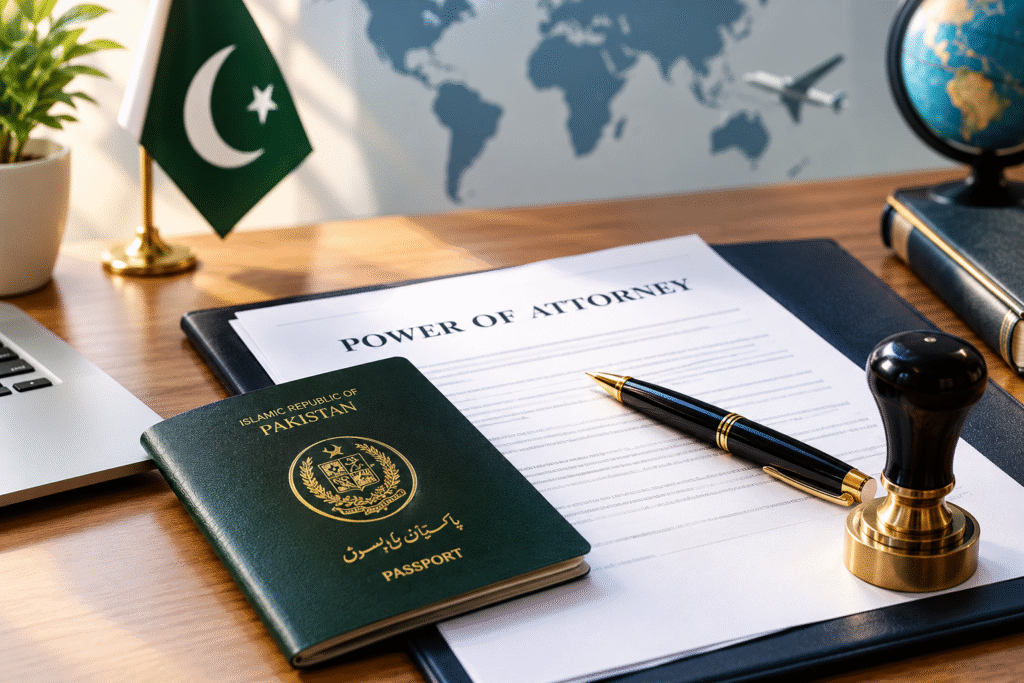
- A registered Power of Attorney (POA), which we’ll cover in detail below.
Step 2: Set Up a Power of Attorney You Can Actually Trust
You can’t sign transfer documents, visit the society office, or collect possession papers in person — so someone needs to do it on your behalf. That’s what a POA is for.
A few things worth knowing:
- The POA should be attested by the Pakistani Embassy or Consulate in your country of residence, not just notarized locally.
- Be specific about what powers you’re granting. A general POA that lets your attorney sell the property without your written consent is a common source of disputes narrow it down to booking, documentation, and possession only, unless you have full trust in the person.
- Many overseas buyers appoint a close family member, but if that’s not an option, a licensed real estate consultancy can act in this capacity under a limited-scope POA.
Step 3: Verify the Project Before You Send a Single Rupee
This is the step that protects you more than any other. Before committing:
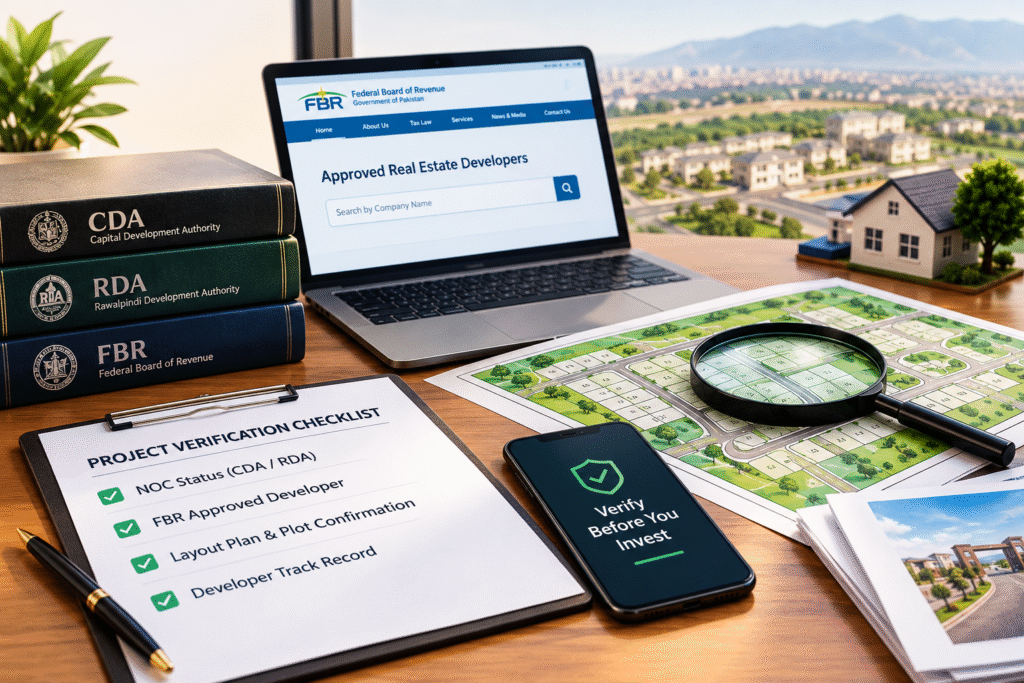
- Confirm the society’s NOC status with CDA or RDA directly not just what’s printed on the developer’s brochure.
- Cross-check the project against the FBR’s approved list for real estate developers.
- Ask for the layout plan and confirm your specific plot number against it, rather than trusting verbal assurances about “prime location.”
- Search for the developer’s track record how many phases have they actually delivered versus how many have been announced.
If you’re comparing options, our guides on Faisal Town, Faisal Hills, and DHA Islamabad walk through the approval status and development stage of each, so you’re not relying on a single source.
Step 4: Booking and Payment — What Remote Transactions Actually Look Like
Once you’ve picked a project, the booking process for overseas clients usually follows this pattern:
- Your consultant sends the booking form and payment schedule digitally.
- You transfer funds via wire transfer or your Roshan Digital Account always to the developer’s official bank account, never to a personal account, even if it’s your own attorney’s.
- You receive a digital copy of the receipt and allotment/booking letter, with the physical copies held or couriered depending on the developer’s process.
- Your POA holder collects and verifies documents on-ground when required.
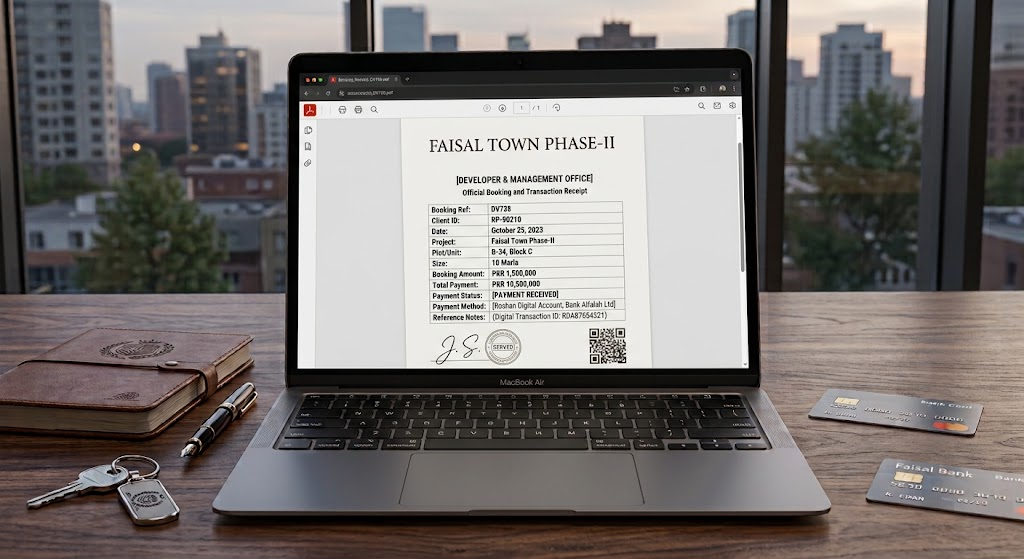
A tip that saves people a lot of stress later: ask for every receipt in writing, even for token payments, and keep digital copies backed up in more than one place.
Step 5: Instalments and Long-Term Follow-Up
Most Islamabad housing projects run on 3-to-4-year instalment plans, which actually works in favor of overseas buyers — you’re not required to pay the full amount upfront. What matters is staying on schedule:
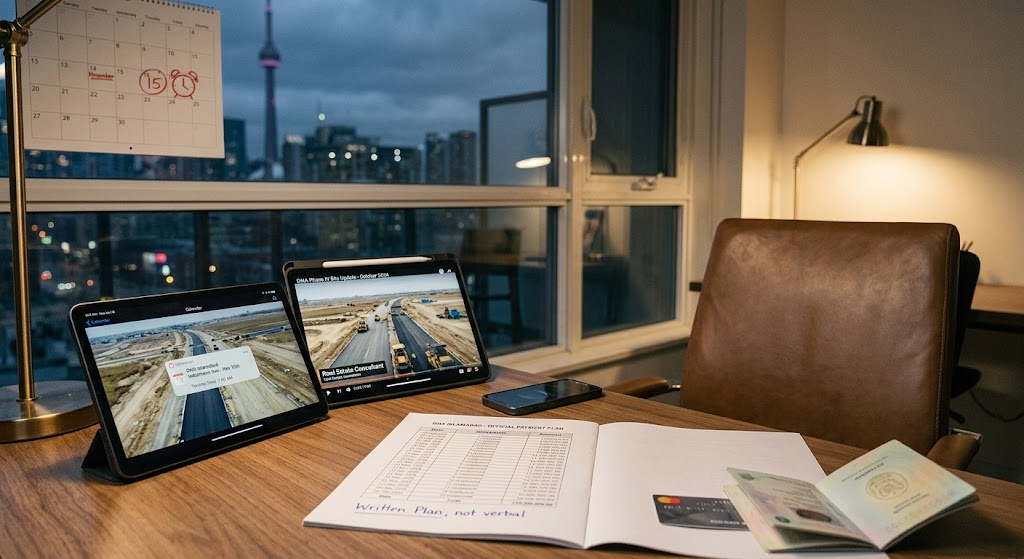
- Set calendar reminders for instalment due dates in your local time zone, not Pakistan time.
- Ask your consultant for a written payment plan document, not just a verbal summary.
- Request periodic development updates — photos or video walkthroughs of the site — especially for newer phases still under construction.
Common Mistakes Overseas Buyers Make (And How to Avoid Them)
- Buying based on WhatsApp forwards or Facebook ads alone. Always verify independently before transferring money.
- Skipping the embassy attestation on the POA to save time — this can cause serious complications later if you ever need to contest or amend the arrangement.
- Sending money to an individual’s personal account instead of the developer’s official account.
- Not budgeting for transfer and registration costs, which typically add a few percent on top of the plot price.
- Choosing a project purely on price without checking approval status — the cheapest option is often cheapest for a reason.
Working With a Consultancy That Handles the Groundwork for You
Realistically, remote investing works best when you have someone on the ground who can verify documents, attend meetings, and follow up with developers — without you needing to be physically present or chase people over the phone at odd hours.
That’s the role Nova Marketing plays for a lot of our overseas clients. We handle site verification, documentation, and booking coordination for projects like Capital Smart City, Top City, and University Town, and we keep clients updated at every stage instead of leaving them guessing.
If you’d like a shortlist of projects that actually match your budget and goals, get in touch with our team — we can walk you through options over a call, whatever time zone you’re in.
Frequently Asked Questions
Can overseas Pakistanis buy property in Islamabad without visiting in person? Yes. With a properly attested Power of Attorney and a trusted consultant or family member on the ground, the entire process — from booking to possession — can be handled remotely.
Is a Roshan Digital Account necessary for buying property from abroad? It’s not mandatory, but it’s one of the more convenient options, since it allows direct foreign currency transactions into a Pakistani bank account without needing to route funds through an intermediary.
How do I know if a housing society is legally approved? Check its NOC status directly with CDA or RDA, and confirm it appears on FBR’s list of approved developers, rather than relying on the developer’s own marketing material.
What’s the biggest risk for overseas investors? Sending money before verifying the project’s approval status, or granting an overly broad Power of Attorney to someone without full trust. Both are avoidable with basic due diligence.